 blog
blog
Is Personal Training Worth It for Beginners?
Table of Contents
- What Beginners Actually Get From Personal Training
- Personal Training Cost: What You're Paying For and Budget-Friendly Options
- How Often Should Beginners Work With a Personal Trainer?
- How Long Should You Have a Personal Trainer?
- How to Track Workout Progress Without Overcomplicating It
- The Downsides of Personal Training Nobody Mentions
- A Decision Framework: Who Benefits Most From Personal Training
- Frequently Asked Questions
Last Updated: October 5, 2026
What Beginners Actually Get From Personal Training
Is personal training worth it for beginners? For most people starting out, yes, with one condition: you need a trainer who teaches rather than just counts reps. The value isn't the workout itself. It's the coaching that stops you from building bad habits in your first three months.
Personal training is a paid coaching service where a certified trainer designs workouts, watches your form, and adjusts your plan as you improve.
Here's what you actually get:
- Proper form and technique on lifts like squats, deadlifts, and presses
- A customized plan built around your fitness level and goals
- Safe training habits that lower your injury risk
- Accountability when motivation fades
- Confidence in a gym you don't yet understand
The ACSM guidelines for exercise professionals treat supervised instruction as a core part of safe beginner training. That's not marketing. It's how the industry defines good practice.
Personal Training Cost: What You're Paying For and Budget-Friendly Options
Personal training cost varies widely by location, trainer experience, and session format. One-on-one sessions cost the most. Small-group and online coaching cost less. Most top-ranking articles stop there, which leaves you no closer to a budget decision. So here is the transparent breakdown they skip.

Typical price ranges you will see in most markets:
- One-on-one in-person sessions: roughly $40 to $100+ per session, with higher-cost metro areas and experienced trainers at the top of that range
- Small-group training (2-4 people): roughly $20 to $50 per person per session
- Semi-private (you plus one friend): roughly $30 to $60 per person per session
- Online coaching with programming and check-ins: roughly $50 to $200 per month, depending on how much direct feedback you get
- Single form-check or technique session: often priced like a standard session, but you only buy one
These are ranges, not quotes. Your local market, the trainer's certifications, and whether the gym takes a cut all move the number. The point is to give you a mental budget before you walk in.
What you are actually paying for:
- Time, a trainer's full attention for 30-60 minutes
- Expertise, certifications, continuing education, and experience
- Customization, a plan built for your body, not a template
- Accountability infrastructure, scheduling, reminders, and someone who notices when you skip
Budget-friendly options, ranked by cost per useful rep:
- Small-group training (2-4 people): cheapest way to still get eyes on your form
- Semi-private sessions: split the cost with a friend and keep near one-on-one attention
- Short-term packages: 6-8 sessions instead of a year-long commitment
- Online coaching: programming and video form checks without in-person rates
- Occasional form-check sessions: book one session every 4-6 weeks to catch drift, then train solo
A simple cost-per-outcome way to think about it: If a $60 session teaches you a squat pattern you keep for years, that is a one-time cost spread across hundreds of future workouts. If you buy 50 sessions and never learn to program for yourself, the math flips. The value is in what you retain, not how many sessions you buy.
How Often Should Beginners Work With a Personal Trainer?
Most beginners get the best results with 1-2 sessions per week for the first 8-12 weeks. That's enough to learn form and build a routine without overspending.
Here's a simple split:
| Frequency | Best For | Typical Duration |
|---|---|---|
| 1x per week | Budget-conscious beginners | 8-12 weeks |
| 2x per week | Faster skill building | 8-16 weeks |
| 3x per week | Full guided training | 4-8 weeks |
| Monthly check-ins | Independent lifters needing form correction | Ongoing |
The rest of the week, you train alone using the plan your trainer built. That's how you build independence.
How Long Should You Have a Personal Trainer?
There's no fixed answer, but most beginners see the biggest return in the first 10-20 sessions. After that, many switch to monthly check-ins.
Think of it in phases:
- Phase 1 (weeks 1-4): Learn the basics. Form, breathing, equipment setup.
- Phase 2 (weeks 5-12): Build a routine. Add weight, track progress.
- Phase 3 (month 4+): Check in monthly. Fix form drift, adjust the plan.
If a trainer pushes you toward a year-long contract on day one, that's a red flag. Good coaches want you independent, not dependent.
How to Track Workout Progress Without Overcomplicating It
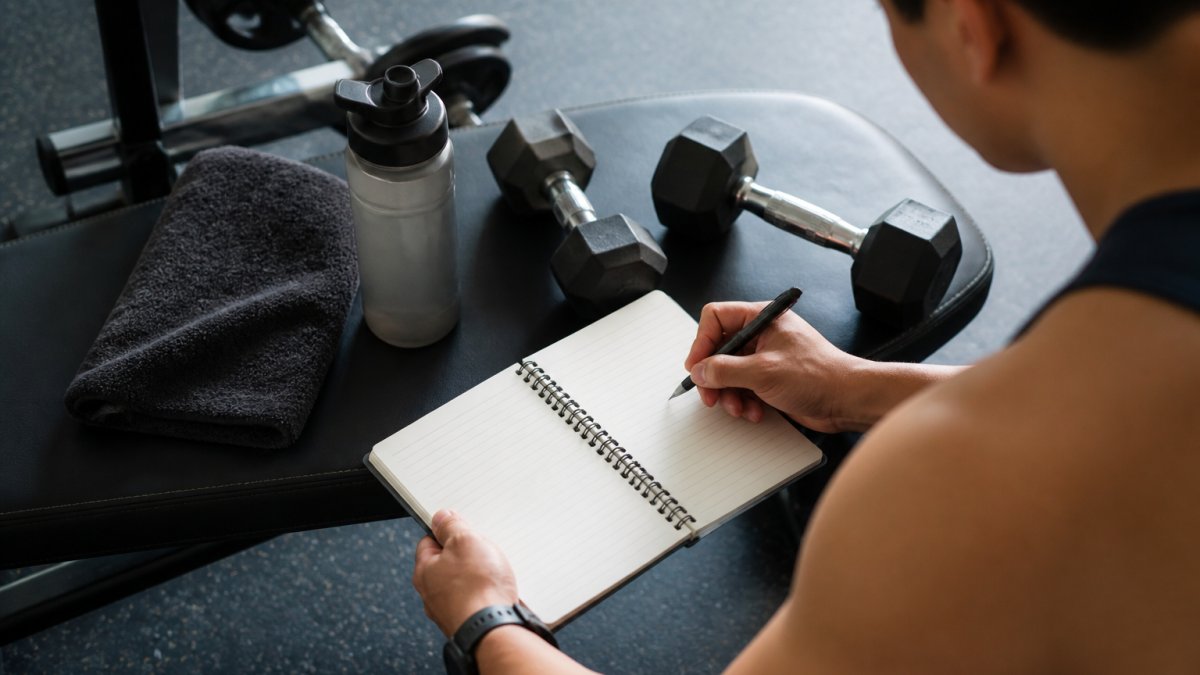
Tracking workout progress comes down to three numbers: weight, reps, and sets. Everything else is noise.
Write down what you lifted. Compare it to last week. If the numbers go up over time, you're progressing.
A simple log needs:
- Exercise name
- Weight used
- Reps completed
- Sets completed
- Notes on how it felt
That's it. You don't need 12 metrics. You need consistency.
This is exactly why LiTRe Workout Tracker was built. It's a clean log for people who want to record a set in seconds and get back to lifting. No cluttered dashboards. No feature bloat. Just your lifts, your progress, and your history when you need it.
The Downsides of Personal Training Nobody Mentions
Personal training isn't for everyone, and pretending otherwise wastes your money. Here are the honest drawbacks:
- Cost adds up fast. Weekly sessions over a year cost more than most gym memberships by a wide margin.
- Trainer quality varies. A certification doesn't guarantee a good coach. Fit matters more than credentials alone.
- Scheduling friction. You train when they're free, not when you're motivated.
- Dependency risk. Some clients never learn to program their own workouts.
- Not all trainers specialize in beginners. Some are great with athletes and impatient with new lifters.
If any of these sound like dealbreakers, a hybrid approach may work better. A few sessions to learn form, then independent training with a solid tracker.
A Decision Framework: Who Benefits Most From Personal Training
Use this framework to decide if personal training fits your situation, and then use the evaluation checklist to decide if a specific trainer is worth your money.
Hire a trainer if you:
- Have never lifted and don't know where to start
- Have an injury history that needs careful programming
- Struggle to stay consistent without someone expecting you
- Want to learn proper form before lifting heavy
Skip it or go hybrid if you:
- Already know the basic lifts and just need a plan
- Have a tight budget and prefer free resources
- Train at home with limited equipment
- Learn well from videos and written programs
Go hybrid if you're unsure. Book 6-8 sessions, learn the fundamentals, then train solo with a tracker. You get expert guidance without a long commitment.
| Your Situation | Best Option | Why |
|---|---|---|
| Total beginner, no experience | 1-2 sessions/week | Learn form safely |
| Some experience, plateaued | Monthly check-ins | Fix weak points |
| Tight budget | Small-group training | Cheaper, still coached |
| Self-motivated learner | Independent + tracking app | Lowest cost |
How to Evaluate a Trainer Before You Pay
Most articles tell you to hire a trainer. Almost none tell you how to tell a good one from a bad one. Ask these questions before you commit:
- What certification do you hold, and is it current? Look for credentials from recognized bodies such as NASM, ACE, NSCA, or ACSM. A certification alone does not guarantee quality, but no current certification is a hard stop.
- How much experience do you have with true beginners? A trainer who mostly coaches athletes may not be patient with someone learning to hinge.
- How will you assess my movement before programming? A good trainer screens your squat, hinge, push, and pull before writing a plan. A bad one hands you a template on day one.
- What does a typical session look like? You want teaching, cueing, and correction, not just counting reps while you sweat.
- How do you track my progress? They should have a system for logging your lifts and reviewing trends, not just memory.
- What is your cancellation and refund policy? Get it in writing before you pay.
- Can I observe or trial a session first? A confident trainer will say yes.
Red flags: pressure to sign a long contract on day one, no movement assessment, no interest in your injury history, and a plan that looks identical to the last client's.
For a deeper look at strength standards by experience level, the NSCA strength and conditioning resources are a solid reference.
Frequently Asked Questions
Should a beginner get a personal trainer?
It depends on your goals and budget. A trainer helps with proper form, customized workout plans, and accountability, which reduces injury risk and builds confidence. If you can't afford ongoing sessions, even 3-5 sessions to learn the basics pays off. If you're self-motivated and can learn from quality resources, you can progress without one. The key is matching the support level to your needs, not following a one-size-fits-all rule.
How often should a beginner meet with a personal trainer?
Most beginners get good results with 1-2 sessions per week for the first 4-8 weeks, then taper to once every 2-4 weeks for form checks and program adjustments. This gives you enough hands-on coaching to learn movement patterns without becoming dependent on a trainer for every workout. The right frequency also depends on your budget and how quickly you absorb exercise instruction.
Can beginners make progress at the gym without a personal trainer?
Yes. Beginners can build strength and confidence using structured programs, video tutorials, and consistent tracking. The main risks without a trainer are poor form, program-hopping, and quitting early. Mitigate these by following a proven beginner routine, filming your lifts for self-review, and logging every session so you can see progress. A workout tracker helps you stay consistent and adjust weights based on real data.
What are the downsides of having a personal trainer?
The biggest downsides are cost and dependency. Sessions add up quickly, and some beginners struggle to train alone once sessions end. Other risks include mismatched trainer style, programs that don't fit your schedule, and pressure to buy packages. Before committing, ask about cancellation terms, try a single session, and clarify whether you'll get a written plan you can follow independently.
Personal training works best when it teaches you to train yourself. The challenge is staying consistent after the sessions end. That's where LiTRe Workout Tracker helps: a clean interface for logging lifts, tracking progress over time, and repeating your fitness journey without navigating complicated software. Get started with LiTRe Workout Tracker and keep your progress visible, one set at a time.